Why Russia went to war with Ukraine: a story that starts centuries ago
In 1994, Ukraine gave up the third-largest nuclear arsenal in the world. Twenty years later, it lost Crimea. To understand why, you have to go back to a tsar who wanted ships.

On December 5, 1994, Ukraine confirmed it would give up what was then the third-largest nuclear arsenal in the world. In return, Russia and other powers pledged to respect its borders. Twenty years later, Russia seized Crimea. In 2022, it tried to reach Kyiv.
To understand how Russia got there, you have to go back to a tsar who wanted ships.
The tsar who turned a country into an empire
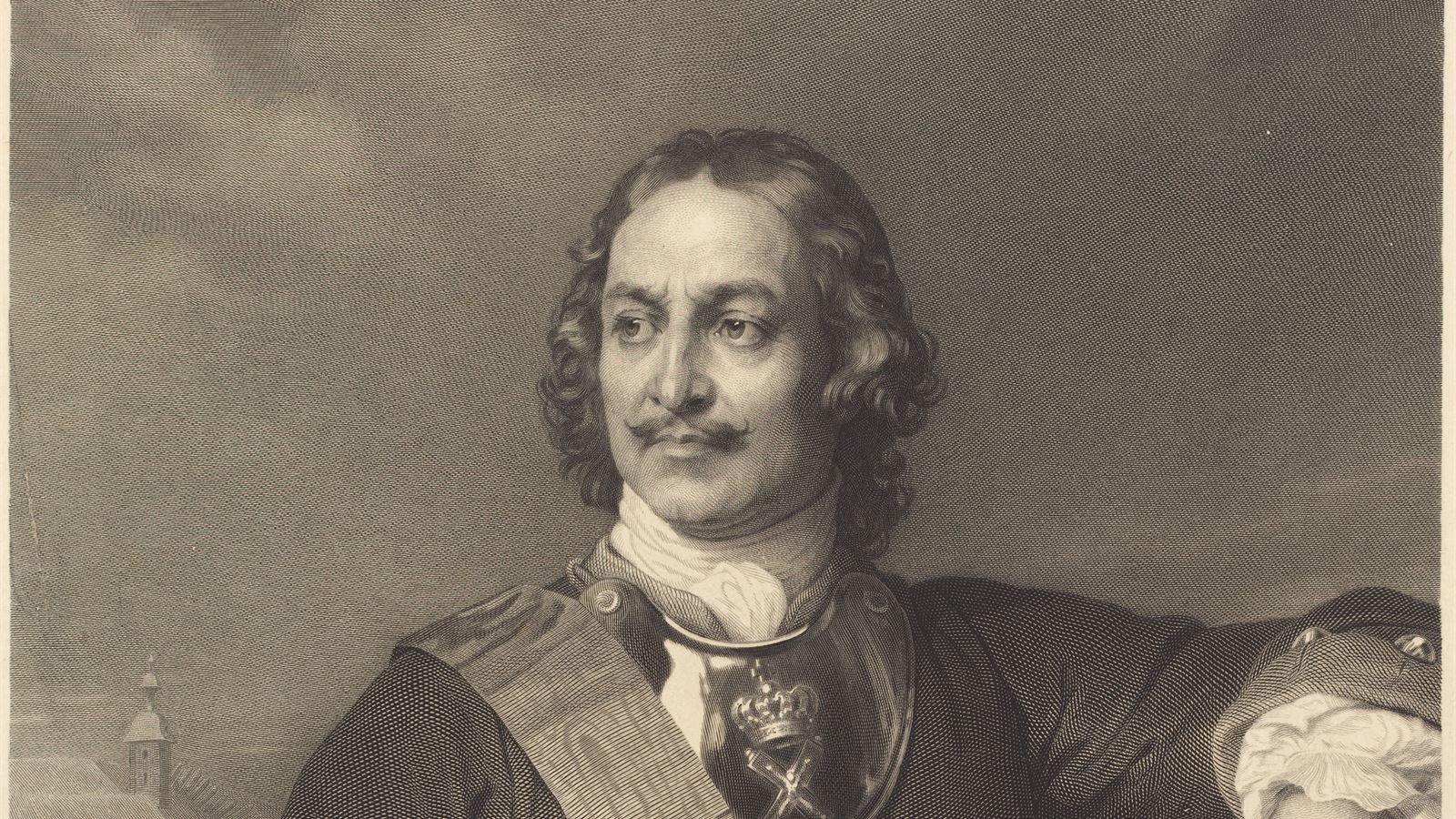
At the end of the 17th century, Russia had little access to the sea. In 1695, the young Tsar Peter tried to take the Ottoman fortress of Azov, near the Don River, and failed.
His response says a lot about what came next. Peter returned to Moscow and ordered a fleet built in Voronezh. In July 1696, with about 30 ships, he captured Azov. The Russian Navy was born.
Then came the war against Sweden, at the time one of the great powers of northern Europe. In 1703, in the middle of that war, Peter founded Saint Petersburg on the banks of the Neva. In the summer of 1709, he defeated the Swedes at Poltava, a city that is now in Ukraine.
The conflict ended in 1721 with the Treaty of Nystad. Russia gained much of the eastern Baltic coast and went from being a tsardom to officially becoming an empire.
This is where the histories of the two nations already cross. Part of today's Ukrainian territory was under Russian rule, and that imperial memory would be invoked again three centuries later.
The army that nearly collapsed before it won
The Russian Revolution brought down the empire, but not its military ambition. In January 1918, Lenin decreed the creation of the Red Army, which won the Russian Civil War in the years that followed.
In 1937, Stalin himself struck that force from within. He purged some of the country's best commanders, among them Marshal Mikhail Tukhachevsky, and badly damaged the army's readiness.
A few years later came the Second World War. The Soviet Union suffered around 27 million civilian and military deaths, although the exact figures are still disputed. In 1945, the Red Army took Berlin in the offensive that all but ended the war in Europe.
The country came out devastated, but with one of the most powerful armies on the planet and an enormous presence in Eastern Europe.
The bomb that surprised the West
On August 29, 1949, the Soviet Union tested its first atomic bomb. Many in the West had expected it to take longer. It later emerged that espionage on the American project had helped a great deal, and that the first bomb was largely a deliberate copy of the US design.
That same year, the AK-47 rifle reached Soviet troops; it would become one of the best-known weapons in the world. The most dangerous phase of the Cold War was beginning, with standoffs such as the Berlin Blockade and the Cuban Missile Crisis of 1962.
That arms race came at a price. Economic stagnation, the cost of competing with the United States and rising nationalism in the Soviet republics helped bring down the very country it was meant to protect.
1991: the month everything changed
On December 1, 1991, more than 90% of Ukrainian voters confirmed independence in a referendum. Without the second-largest Soviet republic, keeping the Union together became practically impossible.
On December 25, Mikhail Gorbachev resigned and handed control of the Soviet nuclear arsenal to Boris Yeltsin, president of Russia. The next day, the Soviet Union ceased to exist.
That left a huge problem: some of the Soviet nuclear weapons were outside Russia, including in Ukraine.
The Budapest promise
That problem led to the agreement that opens this story. Under the 1994 Budapest Memorandum, Ukraine joined the Non-Proliferation Treaty and handed over the weapons. Russia, the United States and the United Kingdom pledged to respect its independence and borders and not to use force against it.
The detail that would matter later is that the document contained no military guarantee. The United States treats it as a political commitment, not a legally binding one. When the crisis came, no one was obliged to fight for Ukraine.
2008: the year of the warning
In April 2008, in Bucharest, NATO declared that Ukraine and Georgia "will become members" of the alliance, but did not open the formal path to membership. Russia opposed both countries joining.
In August, Russia went to war with Georgia. It won, but the conflict exposed weaknesses and accelerated a military reform launched that same year. In practice, the country tried to modernize its forces before the next confrontation, with results still debated today.
2014: Crimea and the Donbas
In November 2013, Ukrainian president Viktor Yanukovych backed out of signing an agreement with the European Union and chose to move closer to Russia. The decision triggered the mass protests known as Euromaidan. In February 2014, he fled to Russia.
Moscow reacted quickly. Russian forces seized strategic points in Crimea, and a referendum was held on March 16 with no option to keep the region as it was within Ukraine. On March 18, Putin signed the treaty annexing the peninsula to Russia. Most of the international community did not recognize the annexation.
That same year, war broke out in the Donbas, in the east, between Ukraine and Russian-backed separatists. In December 2014, the Ukrainian parliament abandoned neutrality and began seeking NATO membership.
The order matters. Russia presents NATO as a threat, while its critics point out that Ukraine only abandoned neutrality after losing Crimea.
Putin's essay and the 2022 invasion
In July 2021, Vladimir Putin published a long essay on the "historical unity" of Russians and Ukrainians. In it, he argued there was no historical basis for the idea of a Ukrainian people separate from Russians. He was accused of historical revisionism and of promoting Russian imperialism.
At the end of that year, Russia massed troops near the border and demanded, among other things, that the West guarantee Ukraine would never join NATO. After repeatedly denying it planned an attack, Putin announced a "special military operation" on February 24, 2022.
He said the Ukrainian government was neo-Nazi and was committing genocide in the Donbas, without presenting evidence. Troops advanced from the north toward Kyiv, from the south out of Crimea, and from the east.
The plan to take the capital failed. Facing fierce resistance and logistical problems, Russian forces withdrew from the north by April 2022. The war became the largest and deadliest in Europe since 1945.
Is the war over?
No. As of November 12, 2026, fighting continued. The November 10–11 round of talks in Abu Dhabi ended with an agreement in principle on a large prisoner exchange, but with no ceasefire and no deal on territory (see what was decided). The only ceasefire in force is a local one in Oleshky, in the Kherson region, agreed in October.
The main sticking point is still territory. Russia demands all of the Donbas, including areas it does not occupy, and Ukraine refuses to hand over land it still controls. Meanwhile, Russian missile and drone strikes kept hitting Ukraine's power grid.
Russian troops occupy about 20% of Ukraine. The war has caused hundreds of thousands of military casualties and tens of thousands of Ukrainian civilian victims.
So, is Russia really that powerful?
Yes and no. Russia spent about US$190 billion on defense in 2025, according to SIPRI, roughly 7.5% of GDP, placing it behind only the United States and China. Together with the United States, it also holds most of the world's nuclear weapons.
But the war has shown the limits of that power. One of the largest militaries on the planet failed to take its neighbor's capital and is still fighting more than four and a half years later.
Perhaps that is the oldest lesson in Russian history. From Azov to Kyiv, the country tends to pay dearly for its ambitions, and to keep pursuing them anyway.
Quick questions
Why did Russia invade Ukraine?
Moscow claimed it was protecting the Donbas and "denazifying" the country, without presenting evidence. Opposition to Ukraine joining NATO and Putin's view that Ukraine is not a separate nation also weigh in.
When did the war start?
The conflict began in 2014, with Crimea and the Donbas. The full-scale invasion began on February 24, 2022.
Did Ukraine ever have nuclear weapons?
It held the world's third-largest arsenal after the end of the Soviet Union and gave it up in the 1990s.
Is Ukraine part of NATO?
No. The alliance promised membership in 2008, but with no date, and Ukraine remains outside.
Sources
- Wikipedia: Peter the Great
- Wikipedia: Russian invasion of Ukraine
- Wikipedia: Dissolution of the Soviet Union
- Wikipedia: 1991 Ukrainian independence referendum
- Wikipedia: Military history of the Soviet Union
- Wikipedia: World War II casualties of the Soviet Union
- Wikipedia: Budapest Memorandum
- Wikipedia: Russo-Georgian War
- Wikipedia: 2008 Bucharest summit
- CNBC: talks in Abu Dhabi (Nov 3, 2026)
- The Moscow Times: ceasefire in Oleshky (Oct 24, 2026)
- TASS: world military spending, according to SIPRI
Spotted an error? See how we fact-check and correct.