Anita Garibaldi: the young woman from southern Brazil who fought on two continents
She was 18 when she boarded a warship. Ten years later, she died pregnant in Italy, fleeing European armies.
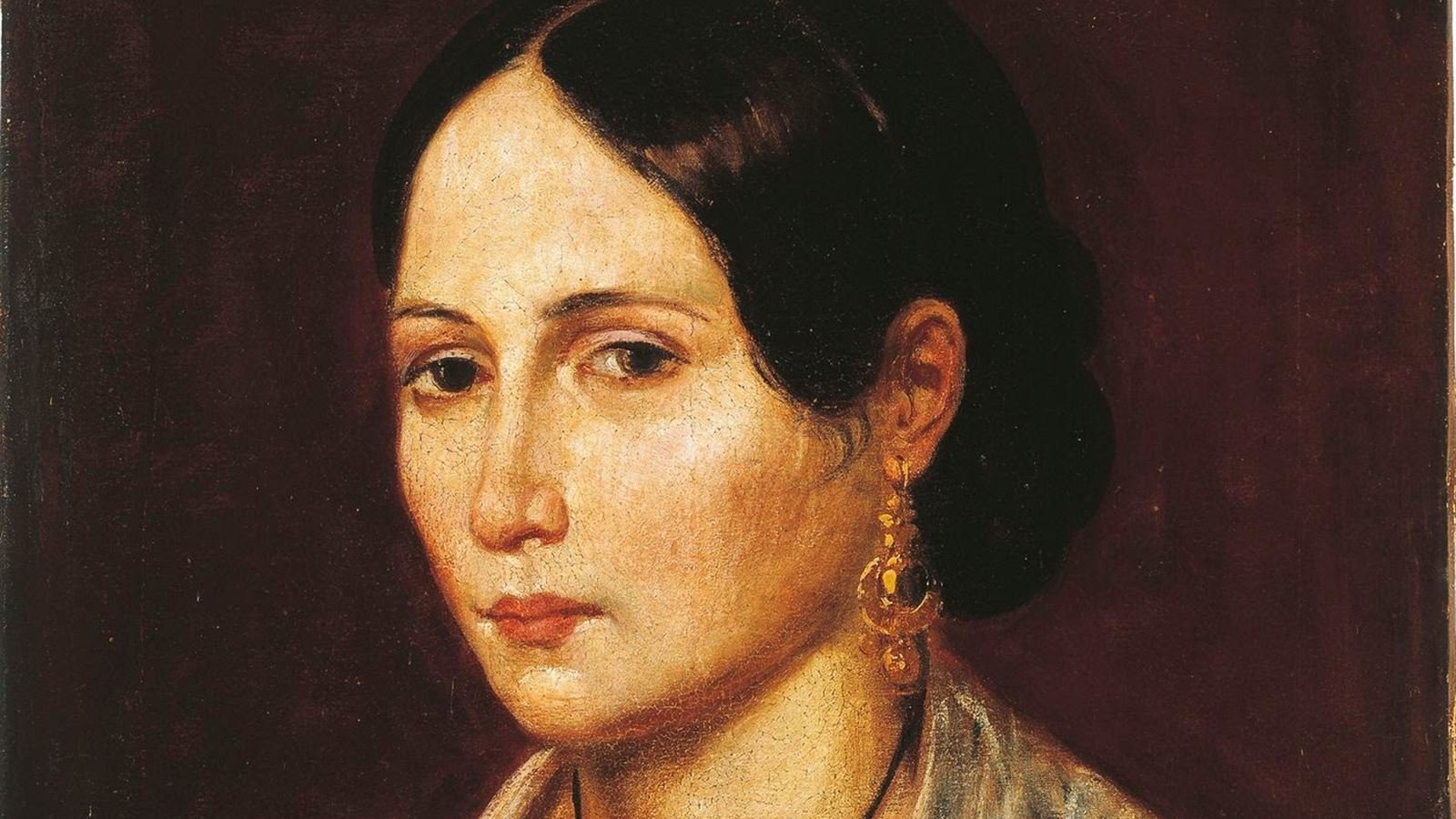

Ana Maria de Jesus Ribeiro was 18 when she boarded a warship beside the man who would become an Italian national hero. Ten years later, she died in Italy, pregnant and on the run.
In between, she carried ammunition under fire, escaped capture and fled on horseback with a 12-day-old baby. Part of this story is documented. Another part became legend, and separating the two is almost as interesting as the adventure itself.
A poor childhood on the coast of Santa Catarina
The most commonly cited birth date is August 30, 1821. The place usually appears as Laguna or Morrinhos, a locality linked to Laguna, in the state of Santa Catarina.
She was the daughter of Bento Ribeiro da Silva, a drover, and Maria Antônia de Jesus. The family was poor, and her father died when Ana was still young.
In 1835, at 14, she married Manuel Duarte de Aguiar, a 25-year-old shoemaker, under pressure from her mother. The marriage had no children and, in practice, did not last long. Duarte ended up in the imperial forces, and his death certificate was never found.
That detail matters later. When Ana remarried, no one could prove whether she was a widow.
The Italian sailor who arrived with the revolution
In July 1839, the Farroupilha rebels took Laguna and proclaimed the Juliana Republic, a state allied with the rebels of Rio Grande do Sul. With them was Giuseppe Garibaldi, a sailor born in Nice who had fled Europe and arrived in Brazil in the mid-1830s.
The couple's most famous scene comes from Garibaldi himself and has been repeated for generations. From his ship, he supposedly spotted Ana through a spyglass. Later, on meeting her ashore, he allegedly said only: "You must be mine."
It's a great story, but it has a single, interested narrator. What the sources confirm is simpler: in October 1839, she left Laguna and sailed with him aboard the ship Rio Pardo.
Baptism of fire
War came within weeks. On November 3, 1839, imperial ships attacked Garibaldi's vessels near Imbituba. Anita fired a musket and came through unharmed by a cannon shot that killed two sailors.
On November 15 came the decisive attack on Laguna. According to the biography used by the Rio Grande do Sul state government, she crossed the combat zone about twelve times in a small boat, carrying ammunition. The town fell, and the Juliana Republic ended less than four months after it was born.
Curitibanos: searching for a body among the dead
The episode that most fed the legend took place near Curitibanos, in January 1840. Anita was guarding an ammunition convoy when imperial cavalry surrounded the rebels. She was captured and told that Garibaldi was dead.
In the best-known version, she asked permission to look for his body on the battlefield. She didn't find it. Taking advantage of a lapse by the guards, she escaped on horseback, crossed the Canoas River and rejoined her companion in Vacaria about eight days later.
The sources disagree on key points. One biographical encyclopedia doesn't even mention the search among the dead and says only that she escaped at night. The river crossing appears sometimes on horseback, sometimes on foot. The core, however, holds: capture, escape and reunion.
Twelve days after giving birth
Their first son, Menotti, was born on September 16, 1840, in Mostardas, in Rio Grande do Sul. Twelve days later, with Garibaldi away, imperial troops attacked the place at night.
Anita jumped on a horse barely dressed, with the newborn in her arms, and hid in the woods. A Brazilian Senate bill says she spent four days in hiding before being found. Afterward, mother and baby endured the rebels' retreat through the Antas River valley.
Montevideo: family life
In 1841, Garibaldi left the Farroupilha cause and the family moved to Montevideo, Uruguay. He worked as a merchant and as a mathematics teacher, and they all lived in a small, shared house.
On March 26, 1842, the two were married at the church of São Francisco de Assis. Three more children followed: Rosita, Teresita and Ricciotti.
Rosita died of illness as a small child in December 1845, while her father was on campaign. Before leaving for Europe, Anita brought flowers to her daughter's grave.
A Brazilian in Italian unification
In early 1848, Anita traveled with the children ahead of her husband. She reached Genoa in April and went to live in Nice with Garibaldi's mother. It was around this time, at nearly 27, that she began learning to read and write.
Garibaldi went back to war, now for Italian unification, and sent her back to Nice more than once. On June 26, 1849, she turned up unannounced at his headquarters in Rome, which was besieged by the French. She was already pregnant with their fifth child.
The Roman Republic fell days later. On July 2, thousands of volunteers followed Garibaldi out of the city, with numbers ranging from 3,900 to nearly 5,000 depending on the source. Anita cut her hair, dressed in men's clothes and rode out with them.
The last days
The retreat crossed central Italy at the height of summer, pursued by Austrian troops. On July 31, the survivors reached San Marino, where Garibaldi disbanded the army. Anita was already very ill, with fever, and refused advice to stay behind.
The smaller group went on to Cesenatico and set out in 13 small boats toward Venice. On August 2, an Austrian patrol captured ten of them. Garibaldi came ashore carrying Anita in his arms and pressed on in hiding through the countryside.
She died on August 4, 1849, at around 7 p.m., at a farmhouse in Mandriole, near Ravenna. She was 27 and pregnant. The cause is usually attributed to a fever, possibly malaria.
Garibaldi was being hunted, and she was buried in haste.
From a makeshift grave to a monument in Rome
In 1859, Garibaldi took Anita's remains to Nice. In 1932, they were moved to Rome and placed in the base of an equestrian statue on the Janiculum Hill, commissioned by Mussolini's regime.
The statue shows a woman on horseback with a baby in one arm and a pistol in the other hand. It is the image of the 1840 escape, turned into a symbol by a government with its own interests in Garibaldi's memory.
In Brazil, federal recognition came much later. Law No. 12,615 of April 30, 2012 added her name to the Book of Heroes and Heroines of the Fatherland.
Heroine, legend, or both?
Anita became known as the "Heroine of Two Worlds", but much of what we know about her passed through other hands. She left few records of her own, and much of the story was told by Garibaldi, his biographers and governments interested in a symbol.
That doesn't diminish her. Her death in flight, the battles of 1839 and the journey from Laguna to Rome, made by a poor woman in the 19th century, would be extraordinary without any embellishment.
Quick questions about Anita Garibaldi
Who was Anita Garibaldi?
She was Ana Maria de Jesus Ribeiro, from Santa Catarina, Brazil, who fought in the Ragamuffin War and in the defense of the Roman Republic alongside Giuseppe Garibaldi.
Where was she born?
In the Laguna area of Santa Catarina. Some sources name the town itself, others the locality of Morrinhos.
What did she die of?
Of fever, possibly malaria, during the retreat from Rome, on August 4, 1849. She was pregnant.
Where is she buried?
In the base of the monument in her honor on the Janiculum Hill in Rome.
Sources
- Law No. 12,615/2012, Book of Heroes of the Fatherland (in Portuguese)
- Wikipedia: Anita Garibaldi
- Wikipedia: Juliana Republic
Spotted an error? See how we fact-check and correct.