Panama Canal: why the waterway became a US-China dispute
With the Strait of Hormuz all but closed, shipping routes have become a national security issue. In Panama, a court ruling took ports away from a Hong Kong company and handed Washington a win.
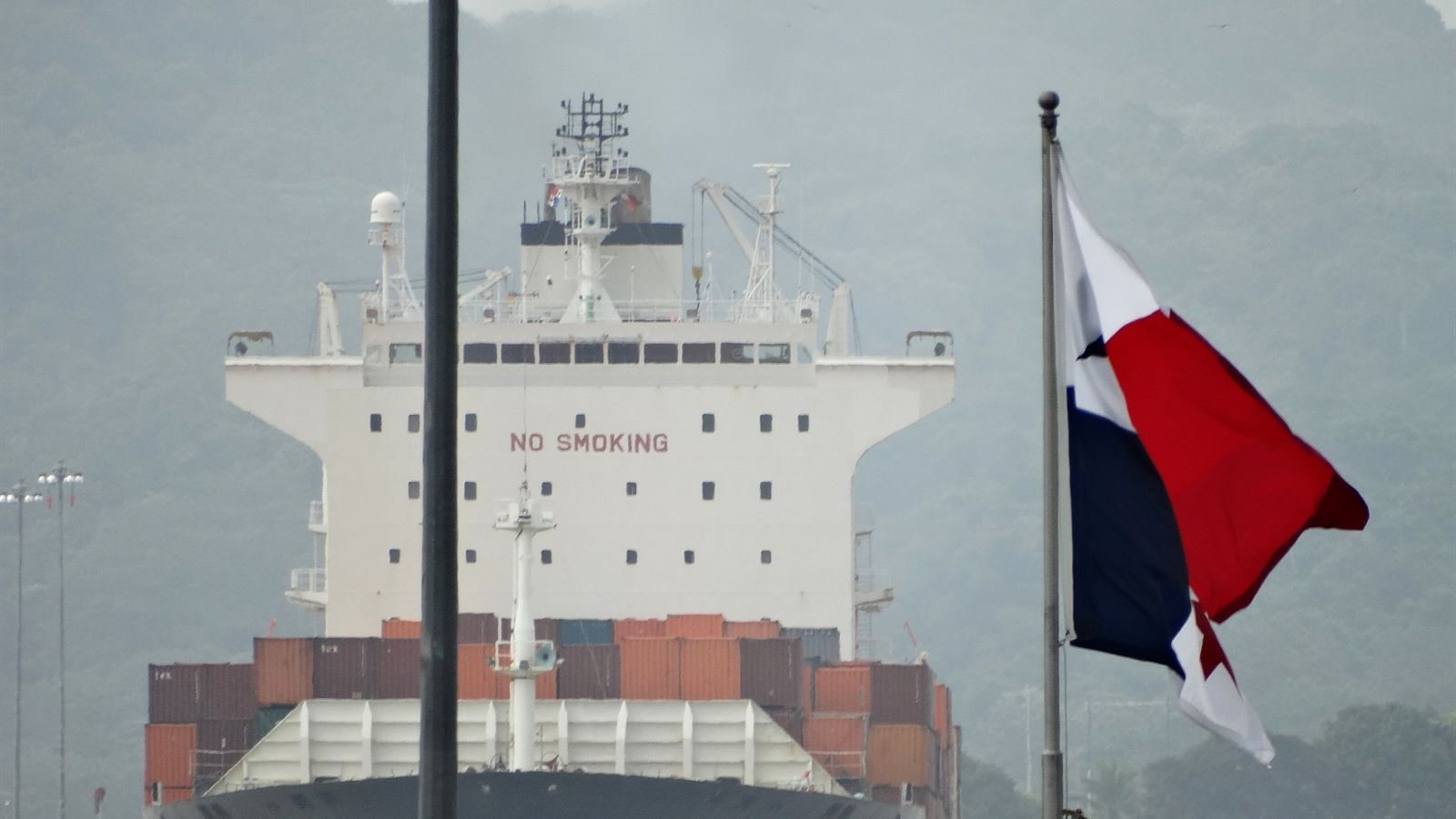

On January 29, 2026, Panama's Supreme Court declared unconstitutional the concession that allowed Panama Ports Company, a subsidiary of Hong Kong's CK Hutchison group, to run the ports of Balboa and Cristóbal at either end of the canal. Panama's government took over the terminals, and China protested.
In Washington, the ruling was welcomed. Since early 2025, President Donald Trump had been saying that China controlled the canal and that the United States should take it back. To understand the dispute, you have to go back more than a century.
The French failure
The Isthmus of Panama is the narrowest strip of land between the two oceans in the Americas. Without a canal, a ship sailing from New York to San Francisco had to go around the southern tip of the continent.
The first to try were the French, led by Ferdinand de Lesseps, who had built the Suez Canal. Work began in 1881 and was abandoned in 1889 after engineering problems, bankruptcy and epidemics. More than 22,000 workers are estimated to have died, mostly of malaria and yellow fever.
A country created with the canal
At the time, Panama was a province of Colombia. The United States wanted to finish the job, but the Colombian Senate rejected the proposed treaty. On November 3, 1903, Panama declared independence with the backing of US warships.
Weeks later, the new country signed a treaty with Washington giving the United States perpetual control of a strip of land along the canal, the Canal Zone. It was signed for Panama by French engineer Philippe Bunau-Varilla, who was not Panamanian, which fueled resentment for decades.
The Americans beat the mosquitoes with sanitation campaigns and changed the design: instead of digging down to sea level, they dammed the Chagres River and created Gatún Lake, 26 meters above the sea. Locks raise and lower the ships. About 5,600 workers died during the American phase. The canal opened on August 15, 1914.
The impact reached the Amazon. The Madeira-Mamoré Railway, promised by Brazil to Bolivia in the Treaty of Petrópolis and finished in 1912, quickly lost importance, partly because the canal opened a cheaper route for Pacific trade.
The handover
The American presence became the central issue of Panamanian politics. In 1964, protests over the right to fly Panama's flag in the Canal Zone left people dead and led the country to break off relations with Washington for several months.
On September 7, 1977, US President Jimmy Carter and Panamanian leader Omar Torrijos signed the treaties providing for the handover. One of them, the Neutrality Treaty, guarantees that the canal stays open to ships of all nations and allows the United States to act to defend that neutrality.
In December 1989, the United States invaded Panama to topple dictator Manuel Noriega. Ten years later, on December 31, 1999, the canal passed to Panamanian control, run by the Panama Canal Authority.
Drought, expansion and China
In 2016, a third, larger set of locks opened for ships that previously did not fit. But the canal depends on fresh water: each ship that passes through uses, on average, about 200 million liters from the lake. In the 2023 and 2024 drought, the canal authority had to limit the number of ships, and queues stretched for weeks.
The United States is by far the canal's largest user, and China is second. Chinese companies invested in ports, bridges and logistics in the country, and in 2017 Panama cut ties with Taiwan to recognize Beijing. The ports of Balboa and Cristóbal had been run by CK Hutchison since 1997.
The canal itself, however, has always been operated by the Panamanian authority. President José Raúl Mulino's government rejected the idea that China controls the waterway, but under pressure it left China's Belt and Road Initiative in 2025.
Why it matters now
In March 2025, CK Hutchison announced the sale of dozens of ports worldwide, including the two in Panama, to a group led by US asset manager BlackRock and an arm of shipping company MSC. Beijing reacted and began reviewing the deal. The Panamanian Supreme Court ruling in January 2026 changed the board: the ports went back to the state, which promised a new tender.
With the Strait of Hormuz all but closed by the war in Iran, governments and companies are again treating shipping routes as a security issue. Panama is the clearest case of a strategic passage in the Americas and shows how a small country tries to balance pressure from the world's two largest powers.
Quick questions
Who controls the Panama Canal?
Panama, through the Panama Canal Authority, since December 31, 1999. Before that, the canal and the Canal Zone were controlled by the United States.
When did the Panama Canal open?
On August 15, 1914, after a failed French attempt between 1881 and 1889.
Does China control the Panama Canal?
No. The canal is operated by Panama's government. A Hong Kong company ran two ports at either end of the canal until the Supreme Court voided its concession in January 2026.
Why does drought affect the canal?
Because the locks use fresh water from Gatún Lake. With little rain, the lake level drops and the authority has to limit the number of ships and the weight of their cargo.
Sources
- Wikipedia: Panama Canal
- Wikipedia: Torrijos–Carter Treaties
- Wikipedia: Panama Canal Zone
- Al Jazeera: Panama court rules Chinese control of canal ports unconstitutional
- Tico Times: Panama finalizes Supreme Court ruling scrapping Hutchison ports deal
- Panama Canal Authority
Found an error? See how we fact-check and correct.