Baron of Rio Branco: the diplomat who closed Brazil's map
While Venezuela and Guyana fight over the Essequibo in The Hague, Brazil has almost no border disputes. Much of that is down to one man who preferred archives to cannons.
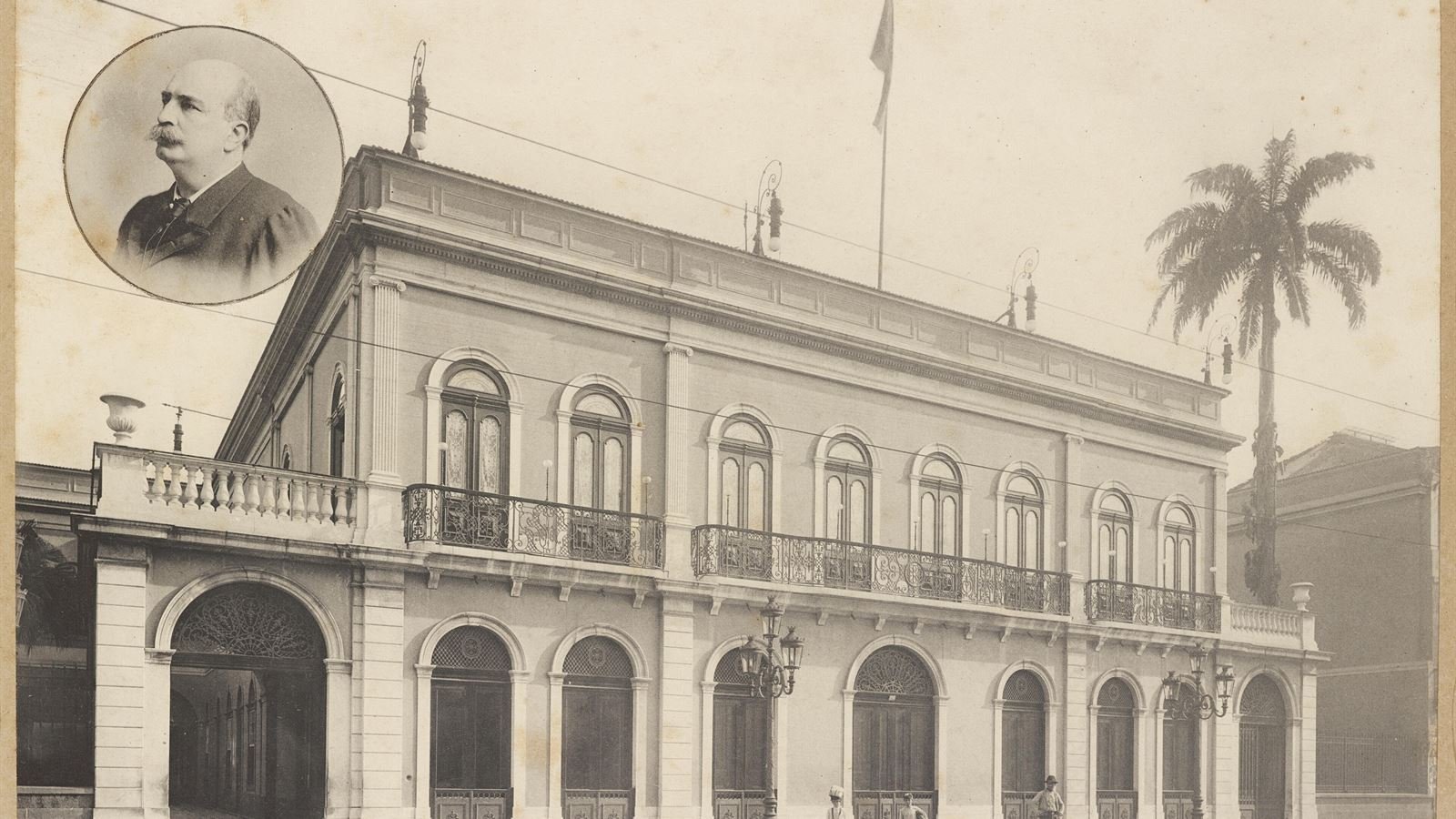

On November 17, 1903, in the mountain town of Petrópolis, Brazil and Bolivia signed the treaty that moved Acre to the Brazilian side. There was no final battle and no occupation. There was a land swap, a payment in pounds sterling and the promise of a railway.
The man behind the deal was Brazil's foreign minister, José Maria da Silva Paranhos Júnior, the Baron of Rio Branco. More than a century later, as Venezuela and Guyana argue over the Essequibo at the International Court of Justice, Brazil shares almost 17,000 kilometers of border with ten countries and has no significant open dispute. Much of that map was closed by him.
The viscount's son
Paranhos Júnior was born in Rio de Janeiro on April 20, 1845. He was the son of the Viscount of Rio Branco, one of the most powerful politicians of the Brazilian Empire, who led the cabinet when the Law of Free Birth was passed in 1871.
The son studied law in São Paulo and Recife, had a reputation as a bohemian and preferred history and journalism to legal practice. He was a teacher, a prosecutor and a member of parliament for Mato Grosso, a province he never visited.
In 1876, he became Brazil's consul general in Liverpool, one of the best-paid posts in the diplomatic service. He spent the next decades in Europe, doing what he enjoyed most: collecting old maps, documents and books on South America's borders. He was made a baron in 1888, a year before the monarchy fell, and kept using the title under the Republic.
Palmas: the first victory
His first chance to use that collection came against Argentina. The two countries disputed the west of today's Santa Catarina and Paraná states, known as the Palmas Question. In 1890, a treaty signed by the Republic's provisional government split the area in half, but Brazil's Congress rejected it.
The case went to arbitration by US President Grover Cleveland. Rio Branco took over Brazil's case in 1893 and submitted a brief backed by documents from Portuguese and Spanish archives. On February 5, 1895, Cleveland ruled entirely in Brazil's favor. The town of Clevelândia, in Paraná, is named after the arbitrator.
Amapá: the victory over France
The second dispute was with France, over the border between Amapá and French Guiana. It dated back to the 18th century and turned on which river was the "Vicente Pinzón" mentioned in the 1713 Treaty of Utrecht. A gold discovery in the region and an armed clash in 1895, with deaths on both sides, made a solution urgent.
The two countries chose the Swiss Federal Council as arbitrator. Rio Branco was sent to Switzerland to prepare the case. On December 1, 1900, the Swiss ruling set the border at the Oiapoque River, as Brazil had argued.
Acre: the Treaty of Petrópolis
With two wins behind him, Rio Branco was asked by President Rodrigues Alves to lead the foreign ministry, known as Itamaraty, in December 1902. He would stay in the job until his death, under four presidents.
The most urgent problem was in Acre. The region was Bolivian under the treaties, but it had been settled by Brazilian rubber tappers during the rubber boom. Bolivia tried to lease the territory to a consortium backed by American and British capital, the Bolivian Syndicate, and the rubber tappers rebelled under the leadership of Plácido de Castro.
Rio Branco chose to negotiate. First, he paid compensation so the consortium would give up its contract. Then, in the Treaty of Petrópolis, Brazil took about 191,000 square kilometers. In return, it ceded a little over 3,000 square kilometers to Bolivia, paid 2 million pounds sterling and pledged to build the Madeira-Mamoré Railway, giving Bolivia an outlet through the Amazon rivers.
The railway was finished in 1912 at an enormous human cost: thousands of workers died of malaria and other diseases during construction. As rubber prices collapsed, it lost importance within a few years. The dispute with Peru over the same region was closed in 1909 with another treaty.
The only defeat: Pirara
Not everything went well. The border with British Guiana in the Pirara region, between today's Roraima state and the Rupununi River, was decided in 1904 by King Victor Emmanuel III of Italy. Brazil's case was led by the abolitionist Joaquim Nabuco, who wrote 18 volumes of arguments.
The two-page award gave the United Kingdom about 19,600 square kilometers of the disputed area and Brazil about 13,600. It was the only border arbitration Brazil lost. The area lies in the south of today's Guyana, the same former colony now facing Venezuela over the Essequibo.
Diplomacy without cannons
Rio Branco also made calculated concessions. In 1909, he offered to share with Uruguay navigation on Lake Mirim and the Jaguarão River, which Brazil had controlled alone. In thanks, a Uruguayan border town was renamed Rio Branco.
Historians highlight his method: study the documents in depth, prefer arbitration and treaties to confrontation and avoid turning neighbors into enemies. Argentine critics at the time, such as foreign minister Estanislao Zeballos, accused him of expansionism, and the rivalry with Argentina for regional influence marked the period.
In 1911, he was nominated for the Nobel Peace Prize. In 1909, he declined to run for president.
The postponed Carnival
Rio Branco died in Rio de Janeiro on February 10, 1912, days before Carnival. The government declared official mourning, and his death changed the festival's calendar that year, an episode still remembered as "the day they postponed Carnival".
In 1945, on the centenary of his birth, the Rio Branco Institute was founded to train Brazil's diplomats, and he was declared the patron of Brazilian diplomacy. April 20 is Diplomat's Day in Brazil. The capital of Acre bears his name.
Quick questions
Who was the Baron of Rio Branco?
José Maria da Silva Paranhos Júnior, a Brazilian diplomat who settled the country's main border disputes and led its foreign ministry from 1902 to 1912.
How did Acre become part of Brazil?
Through the Treaty of Petrópolis of November 17, 1903. Brazil ceded about 3,000 km² to Bolivia, paid 2 million pounds and pledged to build the Madeira-Mamoré Railway.
Has Brazil ever lost a border dispute?
Yes. In the Pirara Question, decided in 1904 by the King of Italy, most of the disputed area went to British Guiana.
Why is Brazil's Diplomat's Day on April 20?
Because it is the Baron of Rio Branco's birthday. He is the patron of Brazilian diplomacy.
Sources
- Wikipedia: José Paranhos, Baron of Rio Branco
- Wikipedia: Treaty of Petrópolis
- Wikipedia in Portuguese: Palmas Question
- Wikipedia in Portuguese: Amapá Question
- Wikipedia in Portuguese: Pirara Question
Found an error? See how we fact-check and correct.