Essequibo: the 127-year dispute between Venezuela and Guyana on Brazil's border
Venezuela has claimed two-thirds of neighboring Guyana since the 19th century. The oil found in 2015 raised the stakes, and Brazil sits right in the way.

On December 3, 2023, Nicolás Maduro's government held a referendum asking Venezuelans whether Essequibo should become a Venezuelan state. Months later, a law created the "state of Guayana Esequiba" on paper.
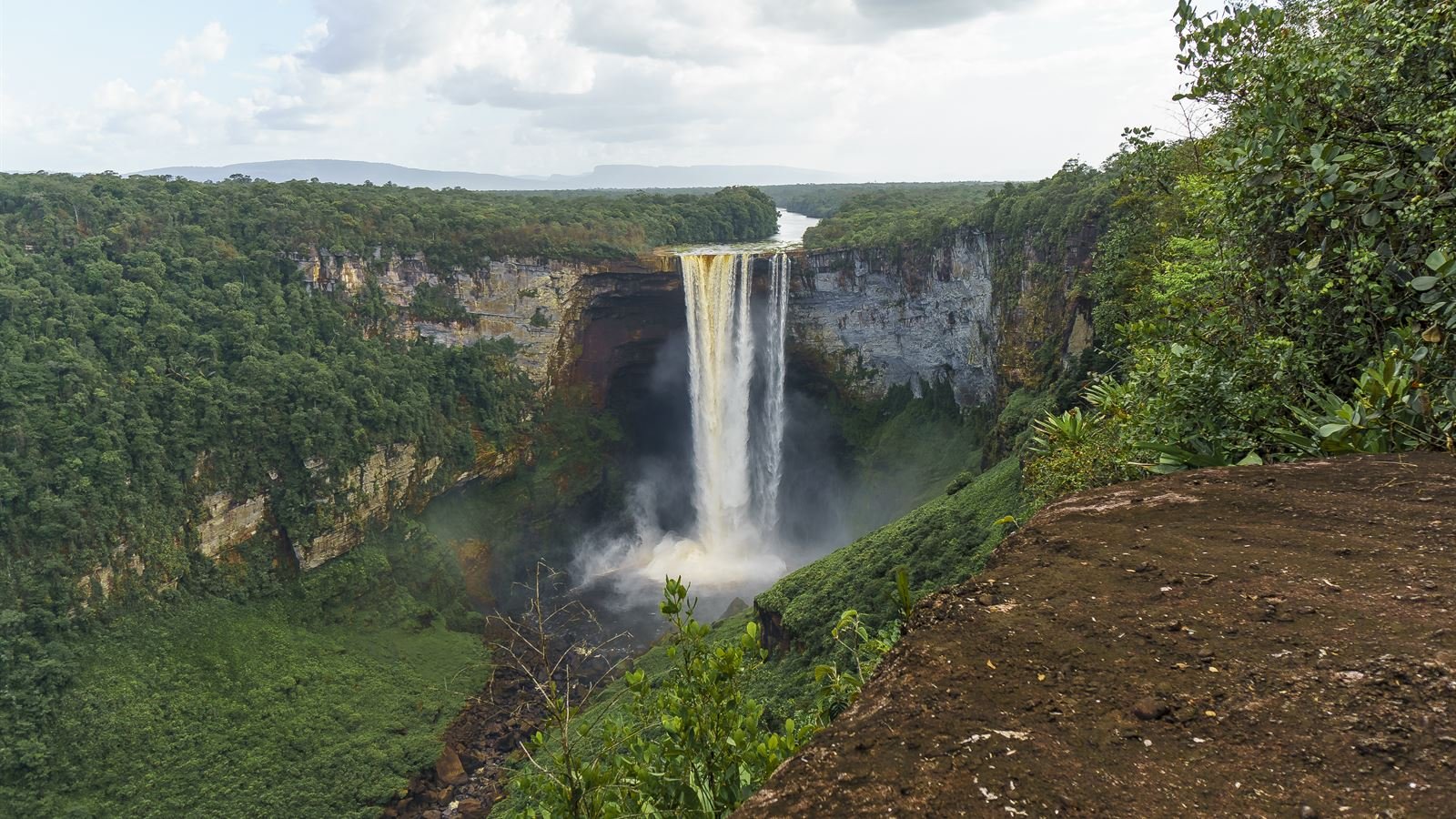
The problem is that this region, about 160,000 square kilometers, makes up roughly two-thirds of the territory of Guyana, the neighboring country. To understand the fight, you have to go back to the time when South America was divided among European empires.
A border drawn by empires
Venezuela inherited the lands of the former Spanish colony. Guyana grew out of Dutch colonies, including one called Essequibo, which passed to the United Kingdom in 1814.
The treaty between the Dutch and British did not define the western border. In 1835, the British hired explorer Robert Schomburgk to draw a line. Venezuela never accepted it.
The dispute heated up with the discovery of gold in the region in 1876. In 1887, Venezuela broke off relations with the United Kingdom.
The Paris award
The United States pushed for arbitration. In 1899, a tribunal in Paris brought together two British judges, two Americans representing Venezuela, and a Russian, Friedrich Martens, who presided.
On October 3, 1899, the tribunal gave almost the entire area to the United Kingdom. Venezuela kept the mouth of the Orinoco River.
The matter seemed settled until 1949, when a posthumous memorandum by Severo Mallet-Prevost, an American lawyer on Venezuela's side, was published. He claimed the decision came from a political deal between the Russians and the British. From then on, Venezuela began to argue that the award is void.
The Geneva Agreement
In 1966, months before Guyana's independence, Venezuela, the United Kingdom and the future Guyana signed the Geneva Agreement. It calls for a "practical, peaceful and satisfactory solution" and, failing agreement, leaves the choice of method to the UN secretary-general.
For decades, negotiations went nowhere. Guyana kept administering the region, home to about 125,000 people, including many Indigenous communities.
Oil changed everything
In 2015, US company ExxonMobil found large oil reserves in the Stabroek block, offshore from Essequibo. Guyana, one of South America's poorest countries, became within a few years one of the fastest-growing economies in the world.
With so much money at stake, Venezuela hardened its stance. In 2018, UN Secretary-General António Guterres sent the case to the International Court of Justice in The Hague. Venezuela objected, but the court ruled it had jurisdiction in 2020 and in 2023.
In December 2023, before the Venezuelan referendum, the court ordered Venezuela not to change the situation in the region. In 2025, Venezuela went ahead anyway with elections for a "governor" of Essequibo.
Where Brazil comes in
Brazil has its own history with this border. Brazil and the United Kingdom disputed the Pirara region, between the Brazilian state of Roraima and Guyana, and in 1904 King Victor Emmanuel III of Italy arbitrated the case. Most of the area went to the British, despite the defense made by Brazilian diplomat Joaquim Nabuco. It was the only border dispute Brazil ever lost.
Today, the concern is different. Essequibo is covered in forest, and any Venezuelan advance by land would have to pass near or through Roraima. In late 2023, the Brazilian army reinforced the northern border, and the government called for a peaceful solution to the dispute.
Where things stand in 2026
In January 2026, the United States captured Maduro in a military operation in Venezuela. He faces drug trafficking charges in New York and has pleaded not guilty. His vice president, Delcy Rodríguez, became interim president and kept the claim to Essequibo.
From May 4 to 11, 2026, the International Court of Justice heard arguments on the merits of the case. Guyana asked the court to confirm the 1899 border and order Venezuela to undo its laws, maps and elections in the region. Venezuela says it does not recognize the court's authority to decide.
A ruling could come in late 2026 or in 2027. Even with a judgment, the question is whether Venezuela will comply.
Quick questions
What is Essequibo?
A region of about 160,000 km² west of the Essequibo River, administered by Guyana and claimed by Venezuela.
Why does Venezuela claim Essequibo?
It considers void the 1899 arbitration that gave the area to the United Kingdom, alleging a political deal among the judges.
Where is the case now?
At the International Court of Justice in The Hague, which heard both sides in May 2026. The ruling has not yet been issued.
How is Brazil involved?
Brazil borders both parties, lost the neighboring Pirara region in 1904 and reinforced its military presence in Roraima in 2023.
Sources
- Wikipedia: Guayana Esequiba
- International Court of Justice: Arbitral Award of 3 October 1899 case
- IntLawCH: ICJ oral hearings (May 2026)
- Wikipedia in Portuguese: Pirara question
- Wikipedia: Nicolás Maduro
- Wikipedia: Delcy Rodríguez
- International Law Blog: disrespecting ICJ interim measures orders (June 2025)
Found an error? See how we fact-check and correct.