Berlin Wall: how a confused press conference brought down the world's most guarded border
The wall went up in a single night in 1961 and stood for 28 years. It fell in one night in 1989, after a spokesman read out a note he did not fully understand.
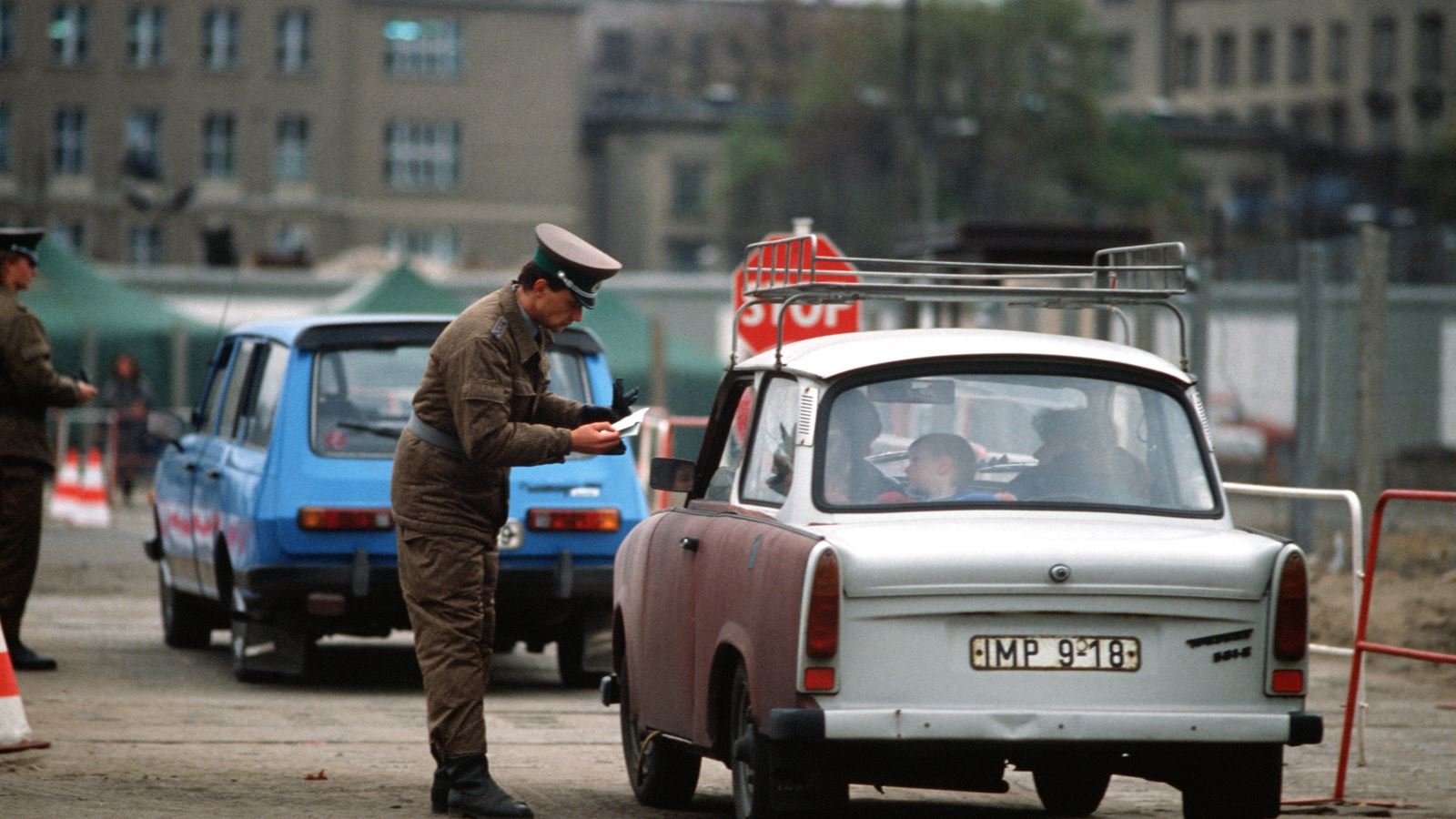

On the evening of November 9, 1989, Günter Schabowski, the East German government spokesman, was wrapping up a live press conference. He read out a note about new travel rules that he had received shortly before and did not fully understand.
A journalist asked when the rules took effect. Schabowski searched his papers, hesitated and said: "As far as I know, immediately, without delay." Within hours, thousands of people were at the wall.
A country split in two
After Hitler's defeat in 1945, the victors divided Germany into four occupation zones: American, British, French and Soviet. Berlin, which lay inside the Soviet zone, was also split into four.
In 1949, the three western zones formed the Federal Republic of Germany, capitalist and allied with the United States. The Soviet zone became the German Democratic Republic, which was communist. West Berlin was left as a capitalist island inside communist territory.
Why the wall was built
East Germany was losing people. Before the wall, about 3.5 million people, 20% of the population, had left the country, many of them across the open border between the two Berlins.
Those leaving were often the youngest and most skilled: doctors, engineers, technicians. For the communist government, it was an economic drain and a political humiliation.
On June 15, 1961, the country's leader, Walter Ulbricht, told journalists that "no one has the intention of building a wall." Two months later, in the early hours of August 13, soldiers and workers sealed the border with barbed wire. The concrete blocks came in the following days.
28 years of concrete
Over time, the wall became a system more than 140 kilometers long around West Berlin. There were two walls, watchtowers, dogs, alarms and a strip of sand between them that Berliners called the death strip.
Researchers at the Centre for Contemporary History in Potsdam have confirmed at least 140 deaths linked to the wall. One of the best-known cases is that of Peter Fechter, 18, who was shot in 1962 and left bleeding in the death strip for almost an hour, in view of both sides.
The wall also became a Cold War stage. In 1963, US President John Kennedy spoke in West Berlin and said "Ich bin ein Berliner," or "I am a Berliner." In 1987, Ronald Reagan said in front of the Brandenburg Gate: "Mr. Gorbachev, tear down this wall!"
The year everything changed
The wall did not fall out of nowhere. In the Soviet Union, Mikhail Gorbachev had begun reforms and made clear that he would not send tanks to prop up neighboring communist governments, as Moscow had done in Hungary in 1956 and Czechoslovakia in 1968.
In 1989, Hungary began dismantling the fence on its border with Austria. Thousands of East Germans started escaping that way. Inside the country, Monday protests in Leipzig grew week after week.
On November 4, about half a million people protested at Alexanderplatz in East Berlin. The government then drafted a rule easing travel, meant to start the next day, with an application process. That detail never reached Schabowski.
The night of November 9
After the press conference, the news led West German TV bulletins, which many East Germans watched. People went to the border crossings saying they could pass "because Schabowski said so."
The guards had no orders. At the Bornholmer Strasse crossing, commander Harald Jäger, facing an ever larger crowd, decided to open the gate at around 11 p.m. Other crossings did the same through the night.
That night, Berliners from both sides climbed onto the wall with hammers and pickaxes.
What came next
In less than a year, East Germany ceased to exist. Reunification took place on October 3, 1990, and in 1991 the Soviet Union itself dissolved.
The fall of the wall still shapes today's news. In the 1990 negotiations, Western leaders gave Gorbachev verbal assurances about NATO expansion whose scope is still debated. Vladimir Putin, who was a KGB officer in Dresden, East Germany, in 1989, points to this period as the source of Russian distrust of the West.
To understand that link, read why Russia went to war with Ukraine.
Quick questions
When was the Berlin Wall built?
In the early hours of August 13, 1961, by the East German government.
When did the Berlin Wall fall?
On the night of November 9, 1989, when the border crossings were opened.
How many people died at the Berlin Wall?
At least 140, according to the Centre for Contemporary History in Potsdam.
When was Germany reunified?
On October 3, 1990.
Sources
- Wikipedia: Berlin Wall
- Wikipedia: Günter Schabowski
- Wikipedia in Portuguese: Berlin Wall
- Chronik der Mauer (Centre for Contemporary History in Potsdam and partners)
- Berlin Wall Memorial
Found an error? See how we fact-check and correct.