China and Taiwan: the civil war that never officially ended
In 1949, the government that lost China's civil war fled to an island 130 km off the mainland. More than 75 years later, Beijing still calls Taiwan a breakaway province.
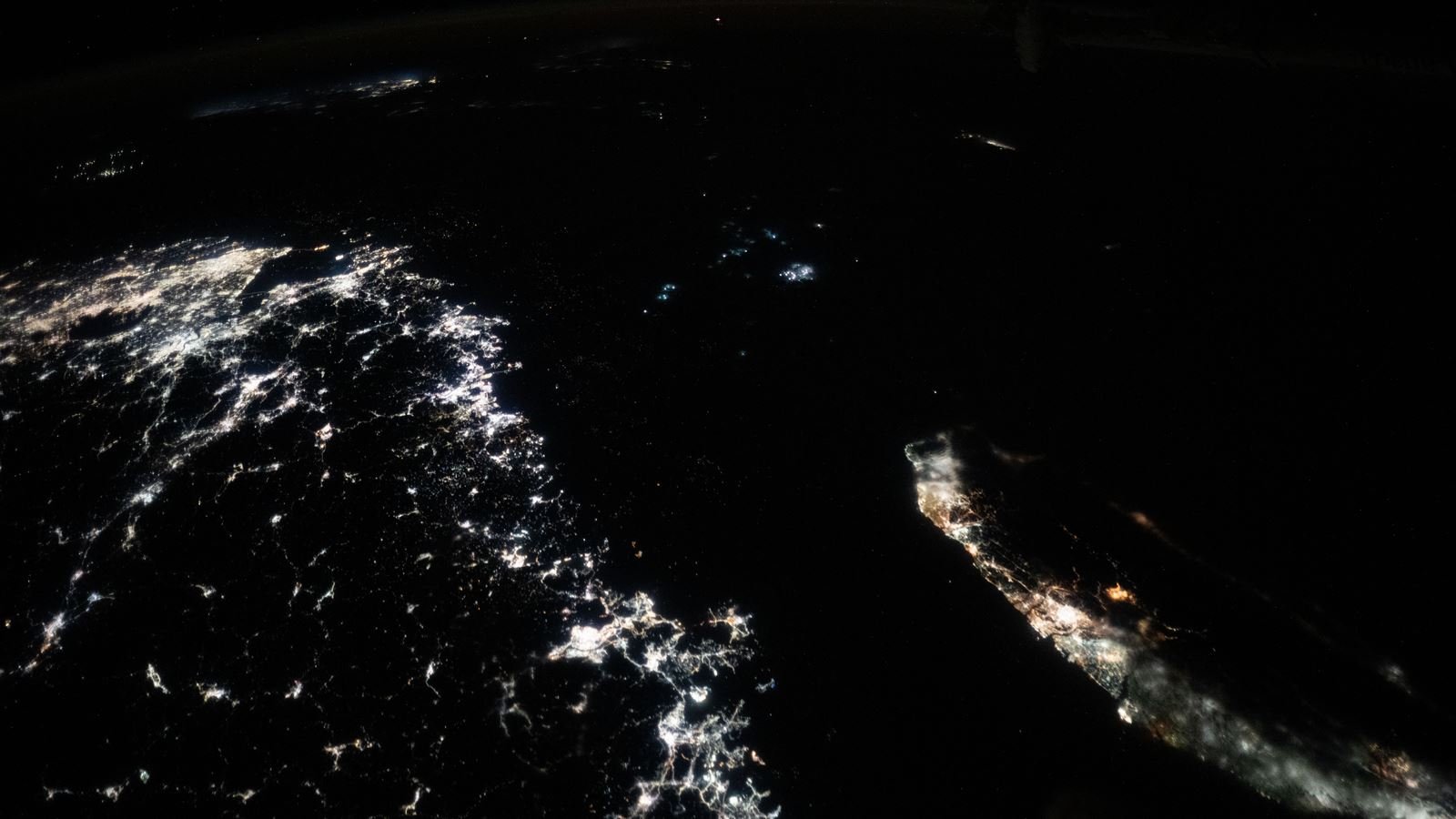

On October 1, 1949, Mao Zedong proclaimed the People's Republic of China in Beijing. In the following months, the government he had defeated, led by Chiang Kai-shek, fled to the island of Taiwan with around 1 to 2 million soldiers and civilians.
The two sides never signed a peace agreement. Since then, each has claimed to be China's legitimate government, and the roughly 130 kilometers of sea between them have become one of the most dangerous places in the world.
An island of many owners
Taiwan was first inhabited by Austronesian peoples, related to Polynesians and Filipinos. In the 17th century, the Dutch and Spanish set up posts on the island, until a leader loyal to the Ming dynasty expelled the Dutch in 1662.
In 1683, the Qing dynasty incorporated Taiwan into the Chinese empire, and settlers from the mainland became the majority. In 1895, after losing a war, China ceded the island to Japan, which ruled it for 50 years.
With Japan's defeat in the Second World War in 1945, Taiwan came under the government of the Republic of China, then led by Chiang Kai-shek's Nationalist party, the Kuomintang.
The civil war and the flight
On the mainland, Nationalists and Communists had been fighting since the 1920s, with a pause to face Japan. In 1949, the Communists won.
Chiang took the government, the army, the gold reserves and part of the imperial museum's treasures to Taiwan. The Republic of China, founded in 1912, kept existing, but now only on the island and a few nearby archipelagos.
Mao planned to invade Taiwan. In 1950, however, the Korean War began, and the United States sent the Seventh Fleet into the strait. The invasion was postponed indefinitely.
From dictatorship to democracy
For decades, Taiwan was also a dictatorship. Martial law lasted from 1949 to 1987, and the repression of opponents became known as the White Terror.
The opening came in the late 1980s. In 1996, Taiwan held its first direct presidential election. Beijing responded by firing missiles into the sea near the island, and the United States sent aircraft carriers to the region.
Today, Taiwan has about 23 million people, free elections and peaceful transfers of power. Polls show that most of the population identifies as Taiwanese rather than Chinese and prefers to keep the current situation.
The world chooses Beijing
Until 1971, Taiwan held China's seat at the UN. That year, the General Assembly gave the seat to the People's Republic. In 1979, the United States also switched its diplomatic recognition to Beijing.
But that same year Washington passed the Taiwan Relations Act, which allows arms sales to the island. US policy became known as strategic ambiguity: it does not say clearly whether it would defend Taiwan if it were attacked.
Brazil has recognized the People's Republic of China since 1974. Taiwan keeps an economic and cultural office in Brasília that works as an unofficial representation.
Why the whole world cares
Beyond politics, Taiwan is central to the world economy. The Taiwanese company TSMC makes most of the world's most advanced chips, used in phones, computers, cars and artificial intelligence systems.
A war or a blockade in the strait would halt that production and much of Asia's trade. That is why analysts see Taiwan as the place where a crisis could turn into a direct confrontation between the United States and China.
What is happening in 2026
Taiwan's president, Lai Ching-te, elected in 2024, says only the Taiwanese can decide the island's future. Beijing calls him a separatist and, since he took office, has held large military exercises around Taiwan.
In November 2026, Taiwan's defense minister, Wellington Koo, said China was conducting "area denial" exercises in the western Pacific with the Liaoning carrier group, without an official announcement. The G7 warned that Chinese military activity east of Taiwan threatens regional stability. Chinese state media called the concerns exaggerated.
Chinese President Xi Jinping repeats that "reunification" is inevitable. The question, on both sides of the strait, is when and at what cost.
Quick questions
Is Taiwan a country?
Taiwan has its own government, army, currency and elections, but few countries officially recognize it. China considers the island part of its territory.
Why does China want Taiwan?
Beijing sees the island as Chinese territory separated by the 1949 civil war and considers reunification a matter of national sovereignty.
Does Brazil recognize Taiwan?
No. Brazil has recognized the People's Republic of China since 1974 but keeps trade relations with Taiwan.
Why is Taiwan important to the economy?
Because the Taiwanese company TSMC makes most of the world's most advanced chips.
Sources
- Wikipedia: Cross-Strait relations
- Wikipedia: Taiwan
- Wikipedia: UN General Assembly Resolution 2758
- Wikipedia: Taiwan Relations Act
- Wikipedia: Third Taiwan Strait Crisis
- HNGN: Taiwan says China ran area denial drills with carrier group (Nov 11, 2026)
- AEI: China and Taiwan update (Nov 6, 2026)
- National Chengchi University Election Study Center: identity polls
Found an error? See how we fact-check and correct.