Cuban Missile Crisis: the 13 days the world came close to nuclear war
With a war involving a nuclear power in the Middle East, the question of how to avoid the worst is back. In October 1962, the answer came down to letters, a secret deal and one officer on a submarine.
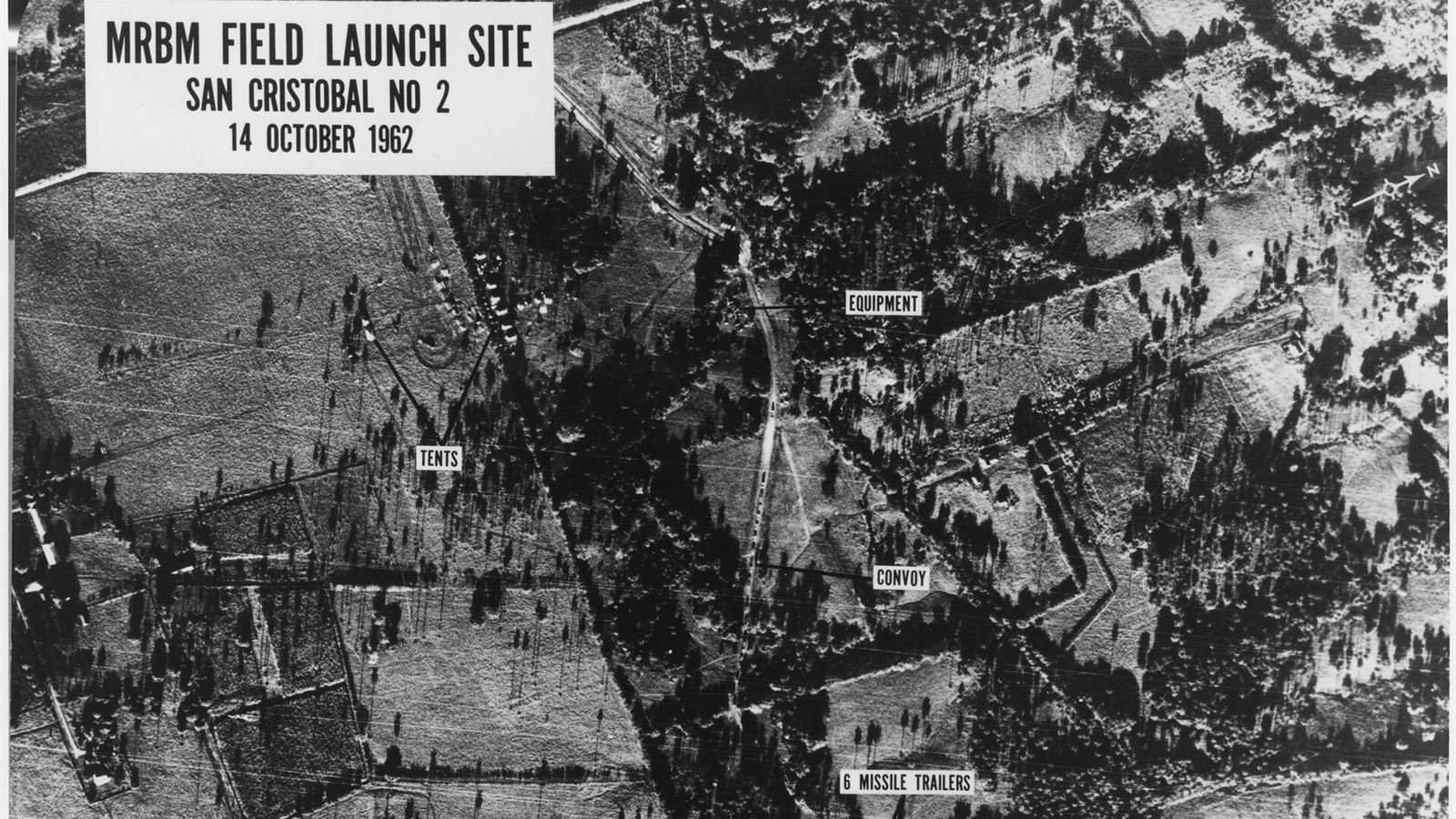
On October 14, 1962, a US Air Force U-2 spy plane flew over western Cuba and took hundreds of photos. Analysts found in them what Washington had feared: launch sites for Soviet medium-range ballistic missiles, able to carry nuclear warheads to much of the United States.
Two days later, the images reached President John F. Kennedy. So began the 13 days that many historians consider the closest the world has come to nuclear war.
Why the Soviet Union sent missiles to Cuba
Fidel Castro took power in Cuba in 1959 and moved closer to Moscow. In April 1961, CIA-trained Cuban exiles tried to topple him with the Bay of Pigs landing, which failed. Castro came to expect an American invasion.
Soviet leader Nikita Khrushchev had his own reasons too. The United States had placed Jupiter nuclear missiles in Italy and in Turkey, a Soviet neighbor. And the US arsenal of missiles able to reach the other country was far larger than the Soviet one.
In July 1962, Khrushchev approved Operation Anadyr, which secretly brought missiles, bombers and about 43,000 Soviet troops to Cuba.
The quarantine
Kennedy's advisers discussed options ranging from bombing the sites to invading the island. The president chose a middle path: a naval blockade, called a "quarantine" because a blockade is considered an act of war.
On October 22, Kennedy revealed the crisis in a televised address. He said any missile launched from Cuba would be treated as a Soviet attack on the United States. The quarantine took effect two days later, and Soviet ships heading for the island stopped or turned back.
Black Saturday
On October 26, Khrushchev sent a letter offering to remove the missiles if the United States promised not to invade Cuba. The next day, a second, tougher message arrived, also demanding the removal of the Jupiter missiles from Turkey.
That October 27 became known as Black Saturday. A U-2 was shot down over Cuba, and its pilot, Major Rudolf Anderson, was killed. Near the island, US ships were dropping practice depth charges to force Soviet submarines to surface.
One of them, B-59, carried a torpedo with a nuclear warhead, which the Americans did not know. Out of contact with Moscow, its captain considered using it. The decision required the agreement of three officers. One of them, Vasily Arkhipov, refused, and the submarine surfaced.
The deal, including the secret part
That night, Robert Kennedy, the president's brother and attorney general, met Soviet ambassador Anatoly Dobrynin. He promised that the United States would not invade Cuba and, informally, that the missiles in Turkey would be removed shortly afterwards, as long as this was not made public.
On the morning of October 28, Khrushchev announced on Radio Moscow that he would dismantle the sites. The Jupiters were removed from Italy and Turkey during April 1963. Because that part stayed secret for years, Khrushchev appeared to have lost the standoff, which helped weaken him at home.
And Brazil?
Brazil, then governed by João Goulart, kept relations with Cuba and defended non-intervention. During the crisis, the US government asked the Brazilian government to pass a message to Fidel Castro: the United States would be unlikely to invade the island if the missiles were removed.
The crisis also strengthened the idea of banning nuclear weapons in the region. In 1967, Latin American countries signed the Treaty of Tlatelolco, which created the first nuclear-weapon-free zone in an inhabited area of the planet.
What the crisis taught
The scare led the two powers to set up, in 1963, the hotline between Washington and Moscow, so that leaders could talk quickly in a crisis. The same year, they signed the treaty banning nuclear tests in the atmosphere.
For international relations scholars, the most repeated lesson is that nuclear crises rarely depend on leaders alone. Miscommunication, orders that do not arrive and decisions made by isolated officers can weigh as much as presidents' calculations. It is a lesson recalled whenever a nuclear power goes to war or threatens to use its arsenal.
Quick questions
What was the Cuban Missile Crisis?
It was the October 1962 standoff between the United States and the Soviet Union triggered by the installation of Soviet nuclear missiles in Cuba. It lasted 13 days and ended with the missiles being removed.
How did the crisis end?
Khrushchev agreed to remove the missiles in exchange for a US promise not to invade Cuba. Secretly, the US also removed Jupiter missiles from Turkey and Italy in 1963.
Who was Vasily Arkhipov?
A Soviet officer aboard the submarine B-59 who, on October 27, 1962, refused to authorize the use of a nuclear torpedo against US ships.
What is the Washington-Moscow hotline?
A direct communication link between the US and Russian governments, set up in 1963 after the crisis to avoid misunderstandings at tense moments.
Sources
- Wikipedia: Cuban Missile Crisis
- Wikipedia: Vasily Arkhipov
- Wikipedia: Moscow–Washington hotline
- Wikipedia: Treaty of Tlatelolco
- John F. Kennedy Presidential Library: Cuban Missile Crisis
Found an error? See how we fact-check and correct.